
Logs Transformed Into Usable Building Material
Tree Milling and Lumber Processing in Rock Island for contractors and homeowners who need raw logs converted into dimensioned lumber or slabs
Raw logs must be cut, squared, and dried before they become usable lumber for construction or furniture projects. QC Sawmill mills logs on-site or at the local facility in Rock Island, processing trees into boards of specified thickness and width based on the intended application. Precision cutting maximizes yield from each log by accounting for taper, natural defects, and grain orientation, ensuring that structural-grade lumber maintains consistent thickness while decorative cuts highlight figure and color variation.
The milling process involves positioning the log on the sawmill bed, making an initial reference cut to create a flat surface, then slicing subsequent boards to the requested thickness—commonly one inch for air-drying or thicker for beams and structural members. Blade selection and feed rate are adjusted based on wood density and moisture content, with hardwoods requiring slower cutting speeds to prevent blade deflection and maintain dimensional accuracy. Service reaches into Davenport where logs can be milled on-site if transport to the mill is impractical due to log size or property access limitations.
Request a milling quote to discuss log specifications, cutting requirements, and processing timelines for your project.
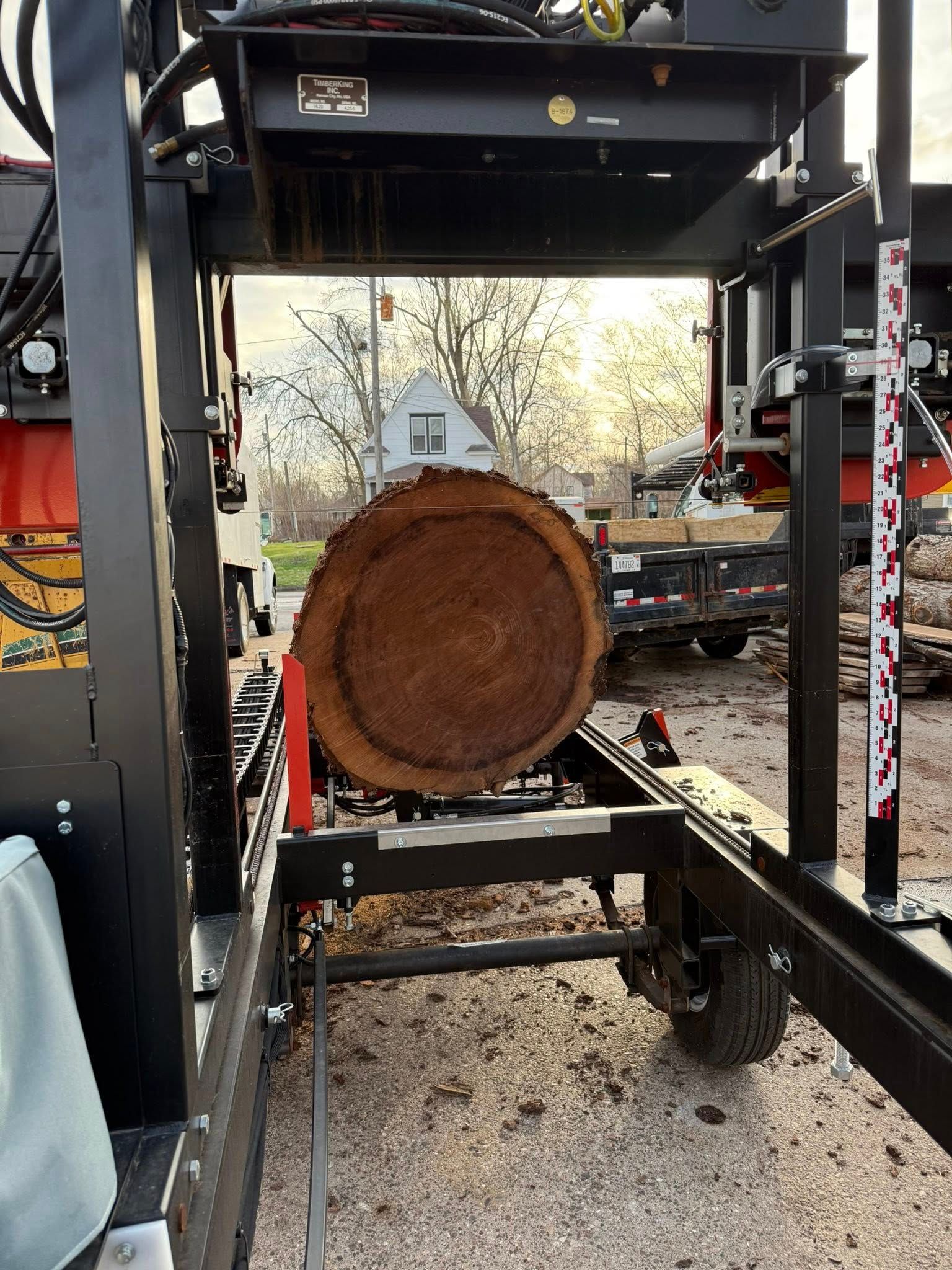
How Milling Prepares Wood for Long-Term Use
Each milling operation includes bark removal, squaring the log to establish parallel surfaces, and cutting boards to uniform thickness using guide rails that ensure the blade travels straight through the length of the log. Quality control involves inspecting each board for checks, knots, and sapwood content, then sorting lumber by grade—clear boards for finish work, knotty boards for rustic applications, and edge pieces for specialty cuts. Freshly milled lumber is stacked with spacers called stickers to allow air circulation during the drying process, which reduces moisture content and prevents warping before the wood is used in construction.
Once processed, you'll see boards milled to consistent thickness that plane smoothly without excessive material removal, logs converted into multiple usable pieces rather than being discarded as waste, and wood sorted by quality so you can match the right grade to each part of your project. The lumber dries more predictably because it was cut to uniform dimensions, and yield calculations show exactly how much usable material resulted from the original log, helping you plan material orders for future builds.
Milling services include cutting and initial stacking for drying, but do not include long-term kiln drying or planing to final smoothness. Clients are responsible for transporting dried lumber after the initial air-drying period, unless additional handling arrangements are made in advance.
What Clients Need to Know About Milling
Questions about the milling process often focus on cutting accuracy, material yield, and drying timelines before lumber is ready for use.
What cutting thickness options are available?
Standard cuts range from three-quarters of an inch to two inches for dimensional lumber, with custom thicknesses available for specialized projects that require non-standard board dimensions.
How much usable lumber comes from a typical log?
Yield depends on log diameter, taper, and defects, but a straight log 16 inches in diameter and 8 feet long typically produces 60 to 80 board feet of usable lumber after accounting for waste from squaring and trimming.
What's the difference between on-site and mill-based processing?
On-site milling brings the sawmill to your property, reducing log transport costs but limiting processing capacity compared to mill-based operations where larger equipment and controlled conditions allow for higher precision and efficiency.
How long does milled lumber need to dry before use?
Air-drying in Rock Island's climate typically requires six to twelve months per inch of thickness, depending on wood species and seasonal humidity levels, before moisture content stabilizes enough for interior construction or furniture use.
Can you mill logs that have been down for a while?
Logs should be milled within months of felling to prevent excessive checking and decay, though sound logs stored off the ground with bark intact may remain viable longer if rot and insect damage haven't penetrated deeply into the wood.
QC Sawmill processes logs into lumber that meets dimensional and quality standards for your specific building or woodworking project. Contact the shop to schedule milling services and discuss cutting specifications based on your log inventory and intended use.