
Raw Material for Builders Who Work With Wood
DIY Wood Slab Sales in Rock Island for hobbyists and contractors sourcing quality lumber for custom projects
Cost-effective access to quality wood slabs allows builders, woodworkers, and DIY enthusiasts to complete projects without the markup added by finished furniture retailers or the limitations of dimensional lumber from big-box stores. QC Sawmill sells raw and finished slabs in Rock Island, providing material in various species, sizes, and conditions—from rough-cut slabs that require milling and finishing to surfaced pieces ready for final assembly. This approach gives you control over the construction process and final appearance while sourcing material that would otherwise require specialty suppliers or significant travel to obtain.
Slabs are available in different stages of processing depending on your equipment and skill level. Rough slabs retain saw marks and uneven surfaces, requiring planing and sanding before use. Surfaced slabs have been milled flat on both faces but may need final sanding and edge work. Finished slabs are sanded smooth and ready for your choice of stain or sealer, reducing preparation time for projects like tabletops, countertops, or shelving.
Visit the inventory in Moline to view available slabs and select material for your next build.
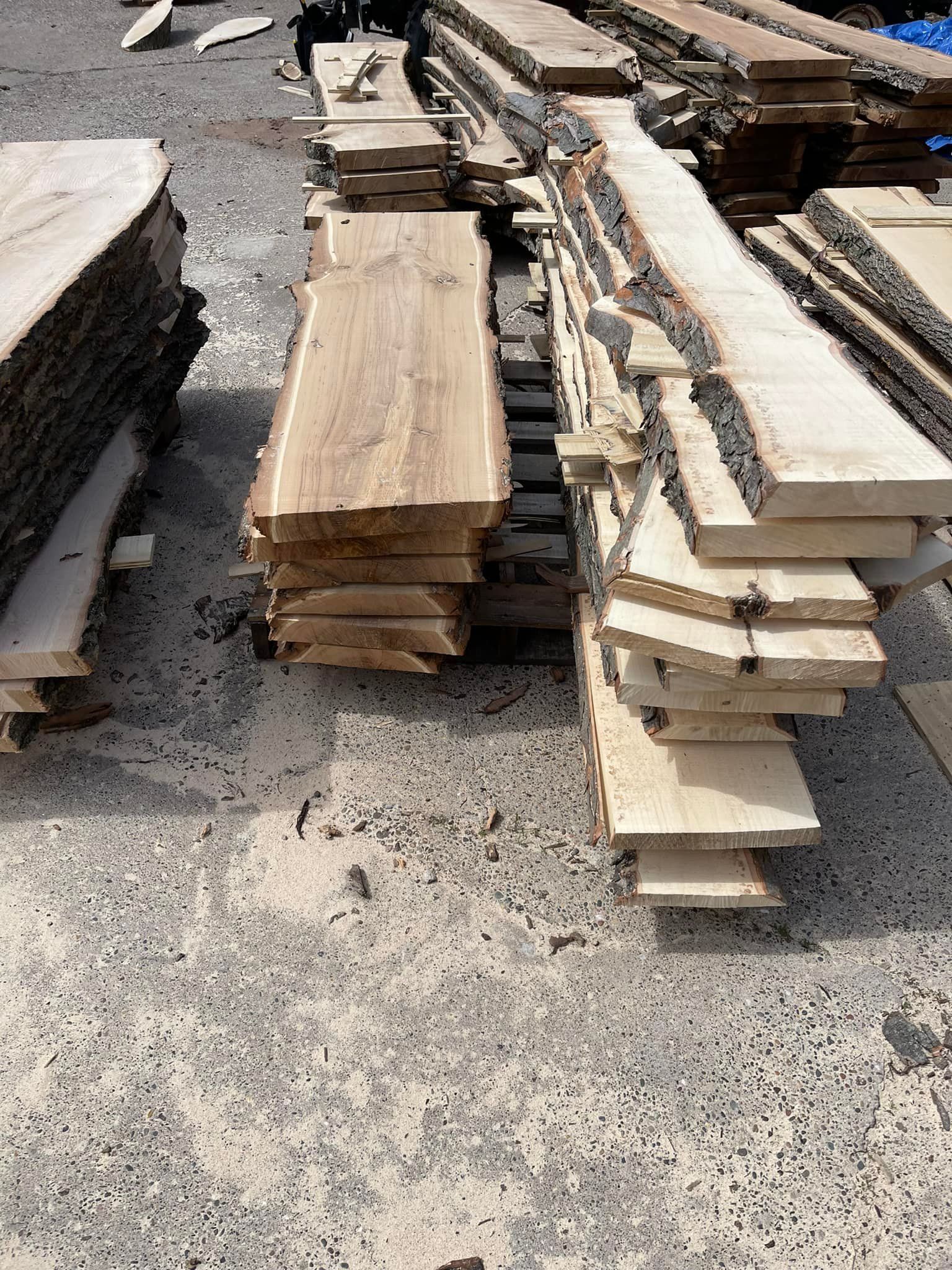
What You Notice Once the Right Slab Is Selected
Wood slabs vary in grain pattern, color, natural edge character, and the presence of features like knots, mineral streaks, or spalting. Selecting the right slab involves evaluating these characteristics relative to your project's design and structural requirements. Thicker slabs support longer spans without deflection, while thinner material works for panels or smaller projects. Live edge slabs retain the tree's natural contour along one or both edges, adding organic detail to finished pieces.
Once you've sourced the right material, the project moves forward without the constraints of pre-dimensioned lumber or the cost barriers of finished custom furniture. The slab's width and length determine what can be built from a single piece, and the wood's species affects workability, finishing characteristics, and final appearance. Walnut machines cleanly and finishes to deep brown tones, oak provides prominent grain and excellent durability, maple offers light color with resistance to wear, and cherry develops richer color over time with exposure to light.
Slab inventory changes based on availability and milling schedules, so selection depends on current stock. Species variety may include domestic hardwoods and occasionally specialty or reclaimed material. Thickness ranges typically from 1.5 to 3 inches, with wider slabs commanding higher prices due to the scarcity of large-diameter logs. Moisture content affects whether the wood is ready for immediate use or requires additional drying time, particularly for structural applications where movement must be minimized.
What Property Owners Usually Ask
Buyers in Rock Island often have questions about selecting and working with raw wood slabs.
What moisture content should slabs have before use?
Wood intended for indoor projects should be dried to 6-8% moisture content to prevent warping, cracking, or joint failure as the material acclimates to interior humidity levels after construction.
How do rough-cut and surfaced slabs differ in cost and usability?
Rough slabs cost less but require planing equipment and additional labor to achieve flat, smooth surfaces, while surfaced slabs are ready for sanding and finishing, saving time for builders without industrial thickness planers.
What species are typically available for DIY slab purchases?
Inventory commonly includes oak, walnut, maple, and cherry, with occasional availability of ash, hickory, or reclaimed wood depending on sourcing and milling schedules in the Quad Cities area.
How is slab pricing determined?
Price reflects the wood species, thickness, width, length, and whether the slab is rough-cut or surfaced, with live edge slabs and figured grain patterns commanding premium pricing due to their visual appeal and limited availability.
When should slabs be sealed or finished after purchase?
Sealing raw slabs with end grain sealer prevents checking during storage or acclimation, while final finishing should wait until the wood has reached equilibrium moisture content in the environment where the finished piece will be used.
QC Sawmill maintains an inventory of slabs for builders and woodworkers working on custom projects. Stop by to view current stock and purchase material for your build.