
Natural Edges Preserved in Every Cut
Live Edge Wood Slabs in Rock Island for homeowners and designers who need unique centerpiece materials with visible grain and natural contours
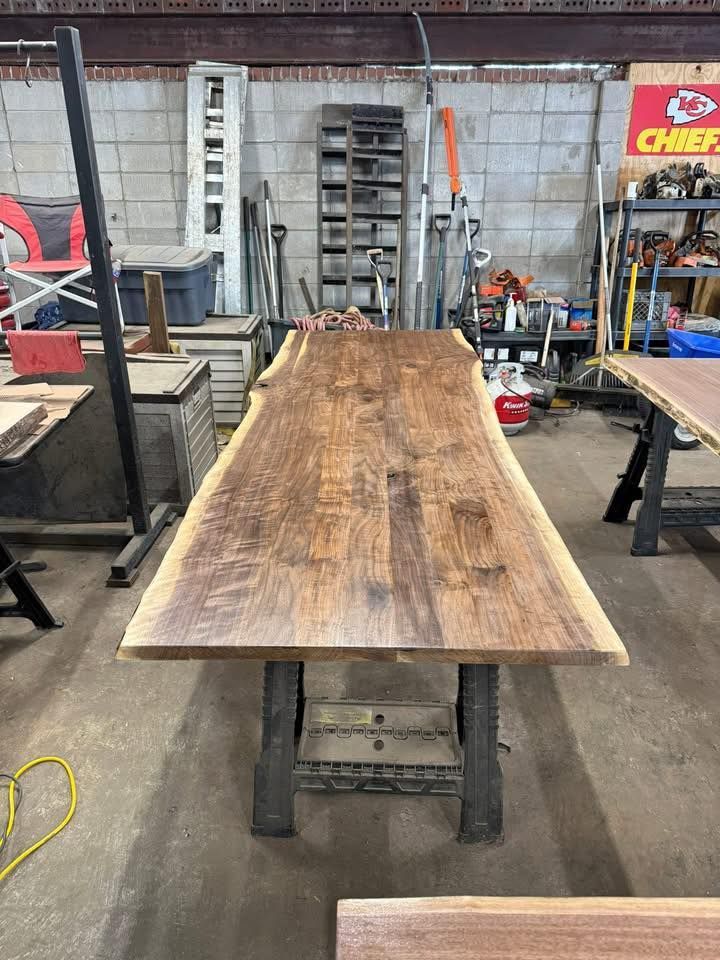
Tables, countertops, and statement furniture pieces often require materials that can't be found in standard dimensioned lumber. Live edge slabs preserve the tree's original outer profile while exposing the interior grain patterns that developed over decades of growth, creating one-of-a-kind surfaces where no two pieces match. QC Sawmill cuts slabs from local trees in Rock Island, selecting logs with pronounced figure, burls, or spalting—fungal patterns that add visual interest—then milling them into flat sections ranging from one to three inches thick depending on structural requirements and aesthetic goals.
The cutting process involves stabilizing the log and making horizontal cuts parallel to the growth rings, preserving both edges while creating a flat surface for mounting or finishing. Slabs are sourced from Bettendorf and throughout the region, with species selection based on color contrast, grain tightness, and natural edge character—walnut for dark chocolate tones with sapwood streaks, oak for prominent ray fleck, and maple for light, consistent coloring. Sizing options range from small accent pieces to full tabletops exceeding eight feet in length, with width determined by the original tree diameter.
Request a slab viewing to examine available inventory and discuss sizing or finishing requirements for your project.
Why Live Edge Slabs Create Lasting Visual Impact
Each slab is kiln-dried or air-dried until moisture content stabilizes below 10 percent, preventing cupping or warping after installation. Finishing options include sanding to progressively finer grits, filling voids or bark inclusions with epoxy for structural stability, and applying oil or polyurethane finishes that protect the wood while highlighting grain depth. Edge preparation involves removing loose bark while preserving the wavy, organic contour that defines the live edge aesthetic, and flattening the underside so the slab sits level on bases or mounting hardware.
After installation, you'll notice a surface where the grain pattern flows continuously from one edge to the other, growth rings visible as concentric lines that track the tree's annual development, and natural imperfections like knots or mineral streaks that add character rather than detract from appearance. The thickness provides structural rigidity, preventing sagging under daily use, and the finish brings out color variation between heartwood and sapwood that wasn't visible when the wood was raw. Live edge counters or tables become focal points in a room because their organic shape contrasts with the straight lines of standard cabinetry and furniture.
Slab selection depends on intended use—thicker cuts for tables that must support weight without flexing, thinner sections for wall-mounted shelves or decorative panels. Finishing and edge preparation are included in slab purchase pricing, but custom metalwork for legs or mounting brackets requires separate coordination with fabricators.
Slab Selection and Installation Questions
Buyers often ask about grain matching, structural considerations, and how to maintain natural edges over time.
What wood species show the most dramatic grain patterns?
Walnut displays high contrast between dark heartwood and lighter sapwood, while spalted maple shows black zone lines from fungal activity that create intricate webbing patterns across the surface.
How thick should a slab be for a dining table?
Tables that seat four to eight people typically require slabs at least two inches thick to support dishes, elbows, and occasional leaning without flexing, though thinner slabs can be reinforced with steel bars embedded in the underside.
What's involved in finishing a live edge slab?
Finishing includes belt sanding to remove mill marks, orbital sanding through 180 to 220 grit for smoothness, filling voids with tinted epoxy to prevent debris accumulation, and applying multiple coats of finish with sanding between coats for durability.
How do slabs from Rock Island trees differ from imported wood?
Local slabs are already acclimated to regional humidity levels, reducing movement after installation, and they offer traceability—you can often learn the specific property or neighborhood where the tree grew before it was milled.
Can slabs be cut to custom lengths or widths?
Slabs can be crosscut to shorten length or ripped along the grain to reduce width, though cutting removes part of the natural edge and may alter the visual balance that makes the piece distinctive.
QC Sawmill maintains an inventory of live edge slabs cut from locally sourced trees, offering material options for projects where standard lumber doesn't provide the visual impact required. Visit the facility to browse current stock and evaluate grain patterns, dimensions, and species options suited to your design.